Introduction
A dog swallows something it should not have and three hours later you are staring at a $4,500 emergency surgery bill. That exact scenario, not a one is why pet insurance exists and why pet insurance has grown from a small product into something that many pet owners now carry. Growth in popularity does not automatically mean that pet insurance is the right choice for every pet owner. The honest answer depends on math than, on marketing. Veterinary costs have risen steadily for specialty procedures and emergency care. That is part of why this decision carries financial weight today than it did a few years ago.
This guide explains in detail how pet insurance works how much pet insurance will cost in 2026 for dogs and cats what pet insurance covers and what pet insurance does not cover and how to calculate the numbers to decide if a monthly pet insurance premium or a self‑funded emergency fund is the better financial choice, for your particular pet.
How Pet Insurance Actually Works
Unlike human health insurance pet insurance works as a reimbursement model. With insurance you pay the full vet bill when you visit the vet. Then you send a claim to the pet insurance company. The pet insurance company will pay you back a portion of the cost once you have met the deductible. This usually happens in one to four weeks. Pet insurance does not lower the amount you pay at the vet counter. Pet insurance pays you later. This means you still need some cash ready even if you have a pet insurance policy.
Most policies let you pick your deductible, your own reimbursement rate and your own annual coverage limit. These three picks push the premium more, than any other factor. If you pick a deductible and a higher reimbursement rate you pay more each month but the policy pays out more when you make a claim. If you pick a deductible and a lower reimbursement rate you pay less each month but you will pay more of each bill yourself. Because you are picking these levers yourself you should run the numbers the careful way you would handle any other recurring cost in a household budget.
What Pet Insurance Costs in 2026
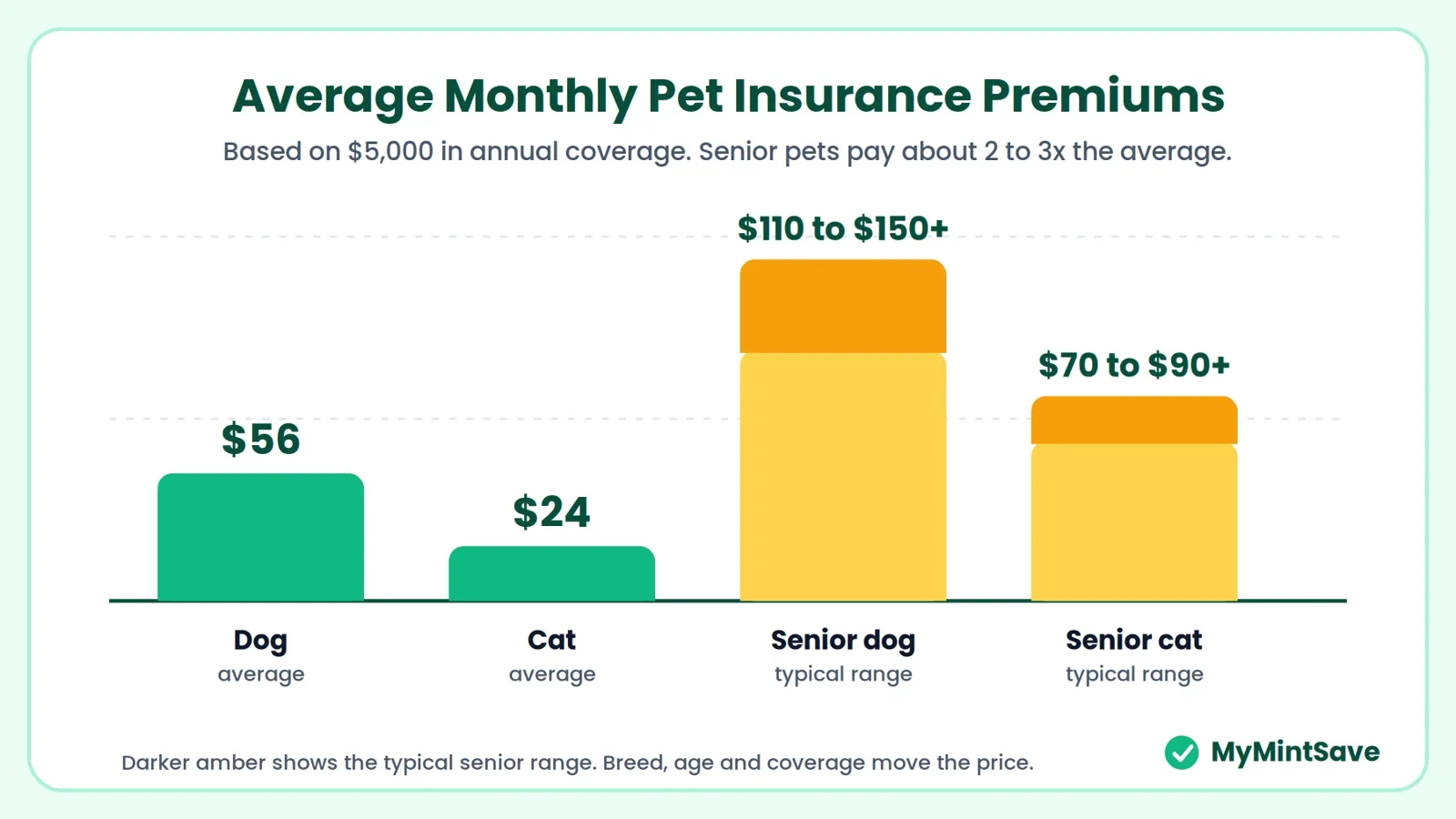
|
Pet
Type |
Average
Monthly Premium |
Typical
Range |
|
Dog |
$56 ($5,000 annual coverage) |
$25 to $90+ depending on breed, age, coverage |
|
Cat |
$24 ($5,000 annual coverage) |
$15 to $50+ depending on breed, age, coverage |
|
Senior dog or cat |
2 to 3x the average rate |
$110 to $150+ for dogs, $70 to $90+ for cats |
Breed matters a lot when it comes to insurance. Dogs that are more likely to have health problems because of their breed usually cost more to insure. For example, a French Bulldog averages $69 a month. On the hand a mixed-breed dog with no known health issues often costs less than the average. Cats usually cost half as much as dogs to insure. This is because on average cats tend to have vet bills, then dogs.
What's Covered and What Isn't
- Accidents: Covered by all policies. Accidents such, as swallowed objects, broken bones and vehicle-related injuries are included.
- Illnesses: Most accident-and-illness policies cover various diseases and diagnose serious conditions such as tumors after the policy start.
- Hereditary and congenital conditions: covered by most comprehensive plans, though often at a higher premium for breeds known to be predisposed to them
- Wellness and routine care: not included in standard plans, vaccinations, annual exams, and flea prevention require a separate wellness add-on at additional cost
- Pre-existing conditions: excluded by every pet insurer without exception, which is exactly why enrolling while a pet is young and healthy matters so much
The pre‑existing condition exclusion is the biggest reason that pet insurance works best when it is bought in advance rather than after a health problem has already happened. If a pre‑existing condition is diagnosed once even if it goes away completely that pre‑existing condition can be permanently excluded from coverage in the future. For this reason, buying insurance for a puppy or kitten before any health problems appear is far more valuable, than buying pet insurance for an older pet that already has a medical history.
Waiting Periods Explained
Every pet insurance policy has a waiting period that starts after you enroll and ends when coverage actually begins. This waiting period is meant to stop people from signing up the moment a pet becomes ill. Accident coverage usually starts after 2 to 14 days from enrollment. Illness coverage usually starts later after 14 to 30 days. Some insurers even require a waiting period for orthopedic conditions, such, as hip dysplasia.
This is worth planning around rather than being surprised by. A pet enrolled the week before a planned trip or a known upcoming risk won't actually have coverage in place yet, which means the best time to enroll is well before you anticipate needing it, not as a reaction to an already-brewing concern.
How Filing a Claim Actually Works
The claims process is fairly consistent across insurers. First pay the vet bill in full at checkout then submit the itemized invoice and any required medical records through the insurer’s app or website. This must be done within a window after the visit often between 90 and 180 days. The insurer reviews the claim, against your policy’s reimbursement rate and coverage exclusions. After review the insurer issues payment directly to you within one to four weeks depending on the insurer. The claims process will finish within that time frame.
Keeping track of your pet’s vet visits in files makes things much faster especially for big claims where an insurance company might need more papers to check if a condition was there before. Some newer insurance companies now pay the vet directly for some claims so you don't have to wait for money. This option isn't available everywhere. It's a good idea to ask about it if you're worried, about when you'll get the money.
Multi-Pet and Other Discounts
Most insurers offer a -pet discount, usually between 5 and 10 percent off each policy for people who have more than one pet. Military families, employer benefit programs and paying annually of monthly can also bring in small extra savings with some providers. None of these discounts cut the cost by much but when you add them all up they can really lower the total premium for a household, with multiple pets.
It's an idea to ask directly about every discount that is available when you get a quote. Insurance companies don't always show all of them clearly. Sometimes the total cost can change a lot. It can be better to insure than one pet with the same company. This can be cheaper than looking for the price for each pet, on its own.
Is It Worth It? Running the Real Math
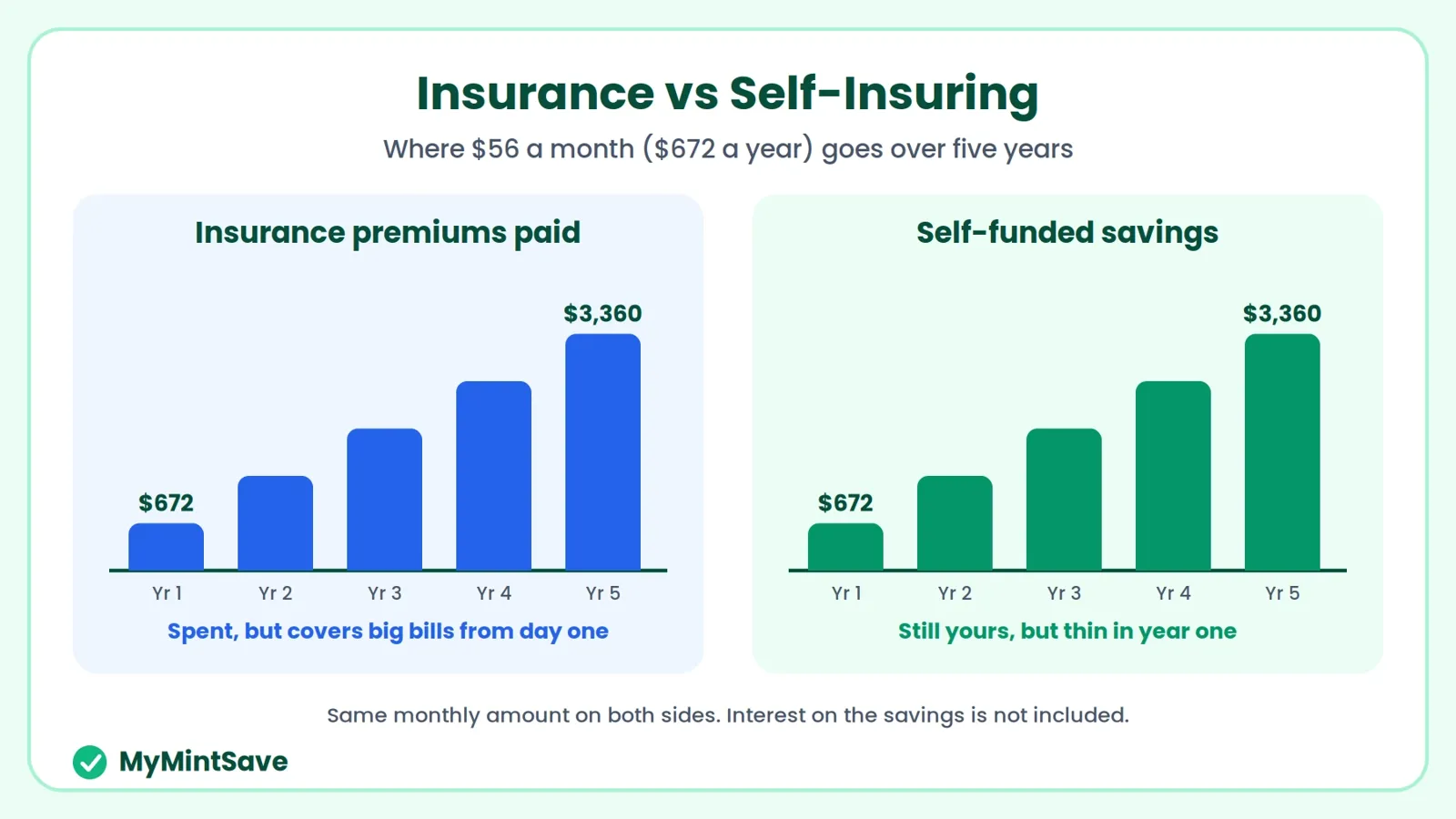
A dog insured at $56 a month costs about $672 a year in premiums. On the hand a single emergency surgery, a torn ligament a foreign object removal or a cancer diagnosis can cost between $2,000 and $6,000 or even more. An insured pet with an 80% reimbursement rate, after a $250 deductible would get back most of that cost. The math usually makes sense when an illness or injury strikes. Insurance is built for those moments not for checkups or routine wellness care.
Where the math gets murkier is for an otherwise healthy young pet with no breed-specific risk factors. Several years of premiums paid without a major claim can add up to more than a single large vet bill would have cost out of pocket, which is exactly why some pet owners choose to self-insure instead, setting aside the money a premium would have cost into a dedicated account rather than paying an insurer.
Breed risk is worth weighing heavily in this calculation specifically because it isn't evenly distributed. Large breed dogs are more likely to develop hip dysplasia. May need joint surgery. Some purebred cats can have issues with their kidneys or heart. Brachycephalic dogs like Bulldogs and Pugs often require breathing surgery at some point, in their lives. For these higher‑risk breeds insurance calculations lean strongly toward covering them than they do for a mixed‑breed pet that has no known health predispositions. This is because the chances of a claim are noticeably higher right, from the beginning.
The Alternative: Self-Insuring With a Pet Emergency Fund
Self‑insuring means you can skip the premium entirely. Instead, you can set aside the amount, about fifty‑six dollars each month for a dog into a savings account that is earmarked only for vet emergencies. Over the years if no big claim occurs self‑insuring can leave you with money than an insurance payout would have given. Unlike a premium the money saved in this way never disappears if you do not use it in one year; it simply keeps growing.
This strategy works best when there is discipline. The money has to stay untouched for its purpose. It should not get absorbed into spending. Putting it in a high-yield savings account from everyday checking helps it earn something while it sits there. Treating it with the seriousness, as a broader emergency fund from everyday checking helps it earn something while it sits there. Treating it with the seriousness, as a broader
Some owners find a middle ground by choosing a hybrid approach. The hybrid approach uses a higher‑deductible insurance policy that caps exposure when a real catastrophic event occurs, such as a $10,000 cancer treatment. The hybrid approach pairs that insurance policy with a self‑funded savings cushion that covers smaller routine unexpected costs that would not trigger the insurance policy’s deductible. The hybrid approach splits the risk of betting on a single strategy. The hybrid approach relies on insurance for a scenario that could otherwise be financially devastating and on savings for everything in, between.
How to Choose a Policy
- Enroll young: getting a puppy or kitten insured before any health problems show up means you avoid the -existing condition exclusion completely
- Match the deductible to your cash cushion: A higher deductible means a premium. That only makes sense if you can easily pay the deductible by yourself without any trouble.
- Check breed-specific exclusions: some policies. Exclude coverage for conditions that are common to specific breeds. It is worth confirming these limits, before enrolling a higher‑risk breed.
- Compare reimbursement on costs not just the premium: A cheaper policy that has a reimbursement rate can end up costing more when you actually make a real claim. It can cost more, than a policy that's more expensive but has better terms.
- Read the waiting period details carefully: Especially for conditions which often have longer waiting periods, than standard accident or illness coverage.
Common Mistakes to Avoid
- Waiting until a pet is older or already sick to enroll: this makes sure that the cost of the plan is higher or that the specific health problem you are concerned, about is not covered all
- Assuming wellness care is included in the policy: Routine immunizations and examinations need an add-on benefit, in almost all insurance policies.
- Choosing the policy without looking at the reimbursement structure: A low premium might mean there is a reimbursement or a low annual maximum.
- Letting a self‑insurance fund get spent on something the entire strategy only works if the money is actually there when a real vet bill shows up.
None of these mistakes are hard to avoid once you know what to watch for. The real choice is to check your numbers instead of copying what a neighbor or a friend did for their pet. If avoiding this kind of mistake matters to you our guide to common saving mistakes talks about the habit, across the whole household budget.
Conclusion
Pet insurance is worth, it depends on a calculation. The pets breed and age matter. Your own tolerance for risk matters. Whether you have the discipline to self-insure if you skip a policy matters. For breeds that're prone, to costly hereditary conditions pet insurance tends to make sense. For owners who prefer to pay a monthly amount instead of risking a large unexpected bill pet insurance tends to make sense.
For a low-risk, generally healthy pet and an owner with the discipline to build a dedicated savings cushion instead, self-insuring can work out just as well, sometimes better. Either path beats the third option, no plan at all, and getting caught completely unprepared the day an emergency actually happens.