
Introduction
Okay, quick test. Can
you explain the difference between collision and comprehensive? Most people
can't, and they've been paying for both every month for years. The coverage
types on a car policy sound alike but they cover totally different things. And
you usually find that out after a crash, which is the worst time to find out.
So this guide goes
through what liability, collision and comprehensive each do, how state minimums
stack up against what you really need, and what the less famous stuff like
uninsured motorist coverage and gap insurance is for. When you're done, your
declarations page should actually make sense. No more list of terms you just
pay for.
You don't need to
know anything about insurance to follow this. It's just that car insurance gets
lumped together as one thing, and it's way easier when you look at each piece
on its own. Do that and the policy stops being a black box. It's a handful of
pretty simple decisions.
Liability Coverage: The Legal Foundation
Let's start with
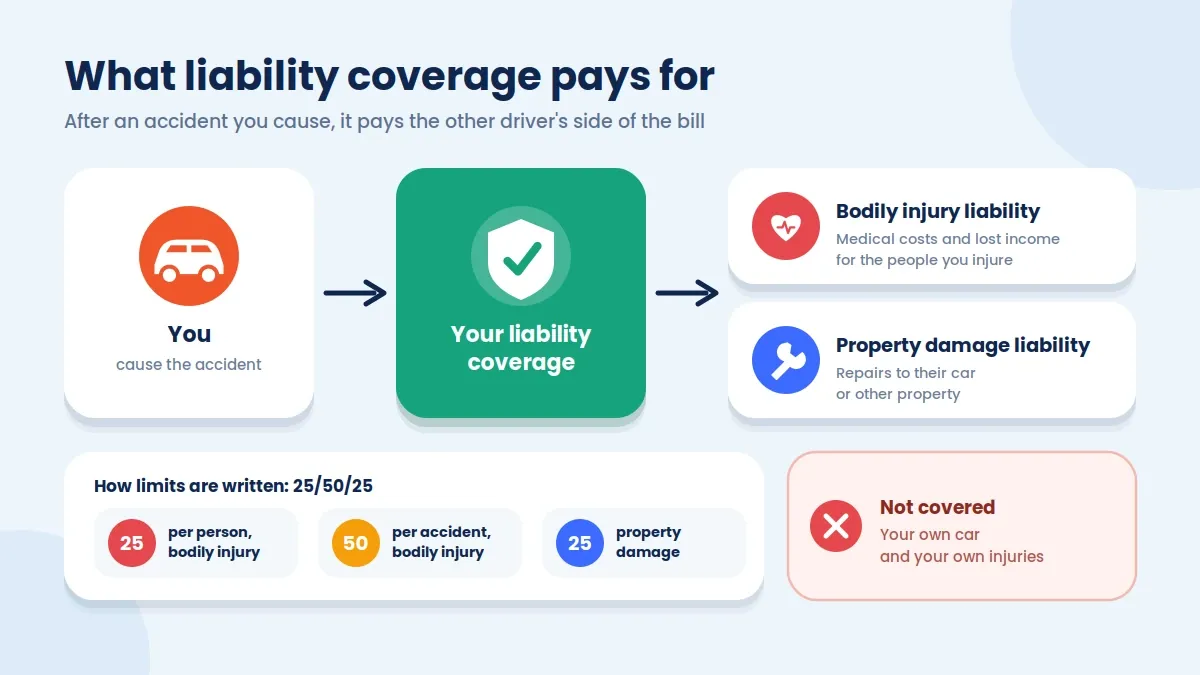
liability. It's the only part of auto insurance that every state requires,
except New Hampshire. What does it pay for? Injuries and property damage you
cause to other people. Not your car. Not your injuries. Just theirs. It comes
in two parts. Liability insurance pays for the cost of injuries sustained by
those you injure as well as for any damage that occurs to their property.
Limitations will
appear in the form of three numbers, such as 25/50/25.That's the per-person
bodily injury limit, then the per-accident bodily injury limit, then the
property damage limit, all in thousands of dollars. State minimums are all over
the place. Florida doesn't require bodily injury coverage at all and uses
personal injury protection instead, while Maine and Alaska go as high as
50/100/25. Medical and repair costs keep climbing, so more states have raised
their minimums for 2026. New Jersey moved to 35/70/25 and Virginia jumped to
50/100/25.
Here's why the state
minimum is a problem. One serious injury claim can blow past $20,000 pretty
easily. And that's before you get to the per-accident limits, which matter when
a few people are hurt in the same crash. Most insurance pros suggest limits
closer to 100/300/100 if you've got savings, a home or other assets a lawsuit
could go after. The price gap between the minimum and much higher limits is
usually smaller than you'd guess.
Collision Coverage
Collision insurance will cover the repairs or replacement of
your own car following a collision, regardless of who was at fault. This could
be a collision with another car, a guard rail or even a pothole. Collision
insurance typically costs between $400 and $800 per year. If you are still
paying for your car, almost all loan providers or lease companies insist that
you take out this policy.
Collision insurance will have a deductible, often ranging
between $500 and $1,000. The deductible will be the amount of money that you
must pay out-of-pocket before the rest of the cost is covered by your insurer.
A high deductible will reduce your premiums, but increase the amount you have
to pay upon filing a claim.
Comprehensive Coverage
Comprehensive
coverage includes any kind of damage your vehicle may sustain other than a
collision. Theft, vandalism, fire, falling objects, hail, flooding, or animal
contact. The name's a bit misleading, because it isn't the most extensive
coverage. It's just the non-collision half of what people mean when they say
"full coverage." The annual price for this insurance will be
$200-$400, which is slightly cheaper than that of collision coverage, and it
will have a separate deductible.
You definitely need
to take it into account if you reside in the area where there is a threat of
hail, floods, fires, and car theft. Just like collision insurance, it is
usually mandatory when financing or leasing a vehicle. Once the car's paid off
and not worth much, it's optional.
State Minimum vs. What You Actually Need
|
Coverage |
Typical
State Minimum |
Commonly
Recommended |
Why It
Matters |
|
Bodily injury
liability |
$25,000/$50,000 |
$100,000/$300,000 |
Protects your
savings and future wages from a lawsuit after a serious injury |
|
Property
damage liability |
$25,000 |
$100,000 |
Modern
vehicles and multi-car accidents routinely exceed low minimums |
|
Uninsured
motorist |
Often $0, optional |
Match your
own liability limits |
Roughly 1 in
7 drivers on the road carries no insurance at all |
|
Collision and
comprehensive |
Not required
by any state |
Carry if
vehicle value exceeds a few thousand dollars |
Required by
lenders on financed or leased vehicles regardless of state law |
The pattern's pretty
clear. State minimums are a legal floor. They're not there to protect your
money. A policy priced right at the minimum can look great on a quote page, but
there's a real gap between what a serious accident costs and what that coverage
pays. And you cover the difference yourself, out of your pocket or your assets.
These minimums aren't
fixed either. Many states have increased their liability limits in light of
rising costs due to medical care and car repairs that go beyond what the
previous numbers were able to accommodate, and more states will likely continue
to increase theirs in response to the continued inflation of accident expenses.
This is something you should do every time you renew, as simply going by the
old figures can leave you vulnerable.
Other Coverage Types Worth Knowing
● Uninsured/underinsured
motorist’s coverage takes care of your injury and property damages even when
the at-fault motorist has no insurance or has inadequate insurance. In light of
this, it is important to note that 1 in 7 motorists is driving without
insurance.
● Personal
Injury Protection (PIP) and Medical Payments Coverage covers medical expenses
irrespective of whose fault it is. It is mandatory in states such as Florida and
Michigan.
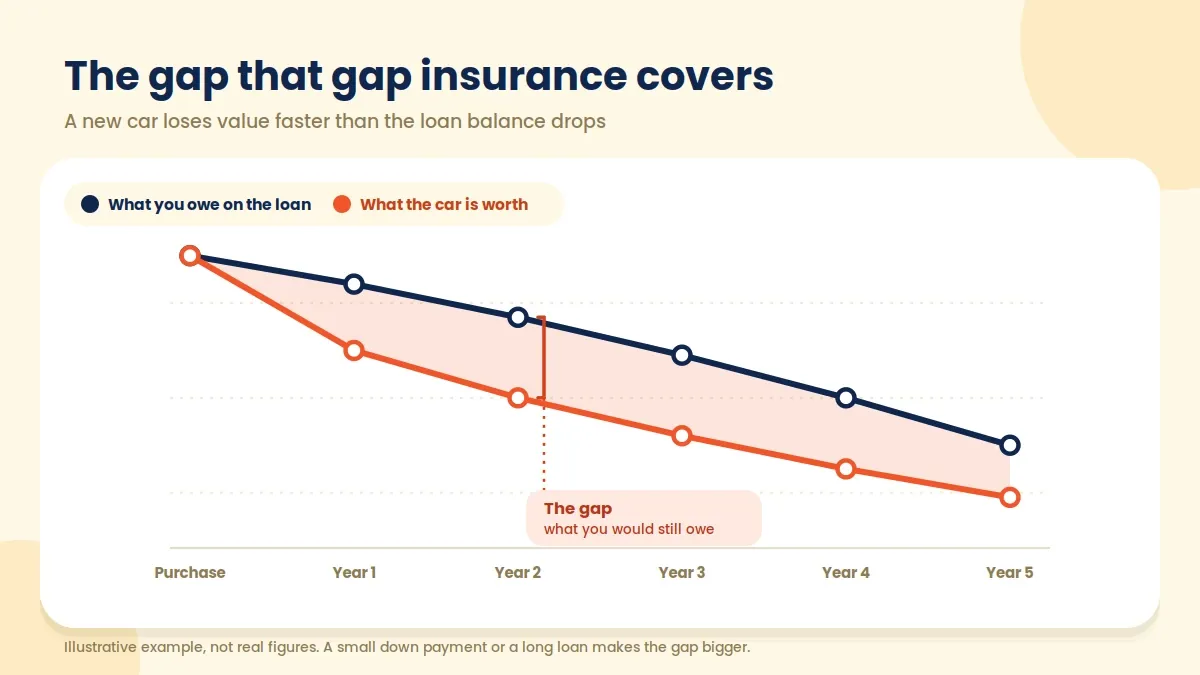
● Gap
insurance is an insurance policy that pays for any balance left over when you
owe more than the vehicle’s actual cash value.
● Rental
Reimbursement offers rental car services in case of your car being repaired
after a claim is made. This service can be affordable and may be considered if
your car is used on a day-to-day basis.
●
Roadside Assistance offers towing,
jumpstarts, and lockout assistance. This can be more affordable as an addition
to your insurance policy than as a membership.
The "Full Coverage" Myth
"Full
coverage" gets thrown around constantly, but it's not a real policy type.
It's just shorthand for liability, collision and comprehensive together. Since
there is no single definition of the term, when you request "full
coverage" from two insurers, you might be given two packages with varying
limits and deductibles despite being labeled identically on your quote.
That's the problem
with the phrase. It seems comprehensive but it isn't. Even the best
comprehensive coverage will not cover your gaps unless you specifically include
uninsured motorist, gap, or rental insurance in addition to it. Don’t be fooled
by marketing terms. Go through the coverage types and dollar limits line by
line. That is the only way that you will know what you are being protected
from.
No-Fault States vs. At-Fault States
The method through
which the claim is paid will depend on whether you hail from an at-fault or
no-fault state. Most of the country is at-fault. The person responsible for the
accident should be financially responsible. The liability coverage for the
driver at fault will pay the claim to the other party. On the other hand, in a
no-fault state, you can claim from your own insurance for any injuries
sustained from the accident. You can only sue the other driver above a certain
injury severity threshold.
About a dozen states
use no-fault rules right now, including Florida, Michigan, New York and New
Jersey. Each one has its own PIP minimum and its own legal threshold for
stepping outside the no-fault system. If you live in one of them, or drive
through one a lot, your PIP limit matters just as much as your liability limit.
It's the coverage that actually pays your own medical bills after most
accidents there.
How Deductibles Actually Work in Practice
A deductible is the
amount you have to pay before the insurance company pays for the remaining
claim for collision or comprehensive insurance. The selection process may be quite
easy. Increasing your deductible from $500 to $1,000 normally results in a
fairly significant reduction in your annual premiums, so the only issue is
whether you would be able to afford the deductible in case of an accident.
Here's the math. Say
a higher deductible saves you $150 a year in premium and you go three years
without a claim. You've banked $450 toward that deductible before you ever have
to pay it. If you've got a solid cash cushion and a decent driving record, a
higher deductible is usually a quiet way to cut your costs. You're not cutting
coverage. You're just changing when you pay for part of it. Not sure your
budget can handle a $1,000 deductible? Work through our complete budgeting guide first and find out
before you raise it.
How to Decide What Coverage You Actually Need
● Still
financing or leasing? Your lender requires collision and comprehensive, and gap
insurance is worth a serious look if your down payment was small
● Own
the car outright and it's worth under a few thousand dollars? Dropping
collision and comprehensive often makes sense, since a payout would be small
next to the premium you'd save
● Got
meaningful savings or home equity? Raise your liability limits well above the
state minimum, because that's exactly what a lawsuit after a serious accident
could reach
● Live
somewhere with lots of uninsured drivers? Make uninsured and underinsured
motorist coverage a priority, even if it's technically optional in your state
Don't let your policy
auto-renew without looking at it. Run these numbers once a year, same as you
would for any other part of your money. If you're building a cushion for
surprise costs, and that includes the deductible on a collision or
comprehensive claim, an emergency fund is what turns a higher
deductible into a smart way to cut your premium instead of a risk. Keep that
cushion in a high-yield savings account and it earns a
little while it sits there.
Common Mistakes to Avoid
Most car insurance
mistakes are the same few saving mistakes you see everywhere else in a budget: paying
for the wrong thing, skipping the thing that matters, or never looking at a
decision again once you've made it. If any of these sound familiar, our guide
to common saving mistakes covers the bigger picture.
● Carrying
only the state minimum when you've got real assets to protect. Raising your
limits usually costs very little compared to what it protects
● Dropping
collision and comprehensive too early on a car that's still worth real money. Check
what the car's actually worth before you decide it's not worth insuring
● Skipping
gap insurance on a new car when you put little down. If it's totaled in the
first year or two, you could owe thousands more than the payout
● Ignoring
uninsured motorist coverage. It's one of the cheaper add-ons for how often it
ends up mattering, since so many drivers have no insurance at all
● Never
comparing quotes. Two companies can price the exact same coverage very
differently, and sticking around for years rarely gets you a much better rate
● Thinking
"full coverage" means every situation is handled. If you don't check
the real limits and add-ons, a full coverage label can still leave gaps in a
specific kind of accident
Conclusion
Auto insurance isn't
complicated once you pull it apart. Liability protects other people from what
you cause. Collision insurance covers your own car. And the smaller add-ons,
like UM/UIM and gap insurance, cover specific holes the first three leave. The
real risk is finding all this out after an accident, when it's too late to
change anything. So pull up your declarations page after you read this and look
at the number next to each coverage type. It takes a few minutes, and it might
be the most useful five minutes you spend on your car insurance all year.