Introduction
Almost every couple
hits this question eventually. Roommates do too, and so do aging parents who
lean on an adult kid to keep up with bills. Should we just put the money in one
account? It sounds so easy. No more splitting the electric bill three ways. No
more sending rent over on a payment app on the first of every month. But here's
the part people skip past. A joint account isn't a handy feature your bank
added. It's a legal arrangement where you each own all of the money in there,
fully and equally, and that cuts both ways a lot more sharply than most people
realize before they sign.
So this guide goes
through what a joint account really is and how ownership and access play out in
daily life. It covers the good parts, and then the ugly ones that only show up
when a relationship breaks, a debt surfaces, someone dies or two people simply
disagree about a purchase. When you're done reading, you should know if a joint
account fits your life or if something lighter would suit you better.
What Is a Joint Bank Account?
A joint bank account
is one account with two or more owners, and each of them has full and equal
rights to every dollar in it. People often confuse this with being an
authorized user on a credit card, or with having view-only access to someone
else's account. It's not that. A joint owner can deposit money, take it out,
write checks and run the whole account alone. Nobody needs the other owner's
okay for ordinary transactions.
Married couples are
the obvious example, but they're nowhere near the only ones. Unmarried partners
open them. So do roommates who are tired of chasing each other for rent,
business partners, and parents who want an adult child to help pay the bills. The
account itself behaves just as any regular checking or savings account would.
The true distinction lies beneath, in the actual ownership and control of the
funds within the account.
It also helps to know
what a joint account is not. Being listed as a beneficiary only allows that
person access when you pass on. Having an authorized user allows the other
person to spend money from the account without owning it. A joint owner is
different. They own the money right away; from the moment the account opens.
That's the reason this choice deserves more thinking than it usually gets.
How Joint Bank Accounts Actually Work
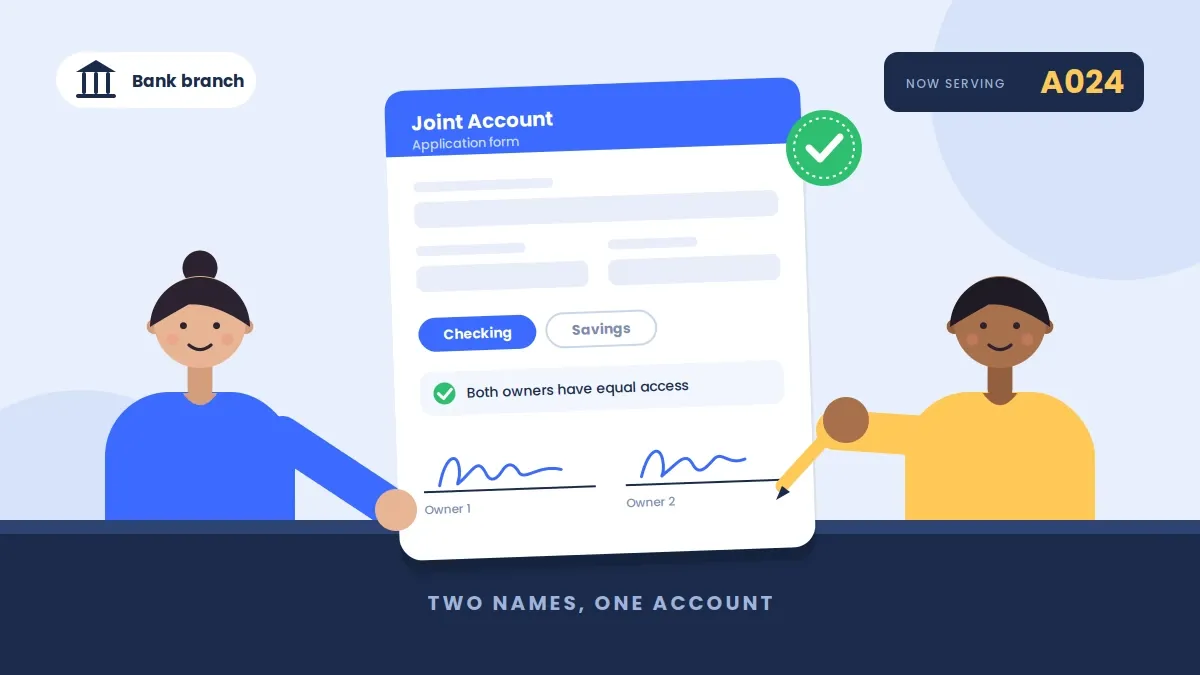
Opening one is
normally easy. Most banks want each person to show up in the branch, or at
least complete identity checks on their own, and you'll need a government ID
and something proving your address, like a utility bill. Once the account is
live, you each usually get your own debit card and your own online banking
login. And you both see everything. The full transaction history is there for
each of you, not just your own spending.
Most joint accounts
are set up as what banks call "joint and several." In plain words,
either owner can act without the other. One signature is enough for a check or
a withdrawal. Some accounts do ask for both owners to approve anything above a
certain amount, which is slower but gives you cover if one person decides to
clear the account out quietly. So ask your bank which kind you're getting. The
easy way is the common way, but it is also the painful way when trust breaks
down.
The Real Benefits of a Joint Bank Account
● Budgeting
gets simpler. Wages, rent, food, and joint payments go to one place, so no one
chases after any transfers or keeps track of who owes how much.
● You
can both see everything. If you agree with each other, then such openness
generally creates trust instead of eroding it.
● Where
there is an imbalance in earning power among you, having a joint account
ensures that both people have equal status concerning the joint funds. Neither
person ends up holding the purse strings.
● Survivorship
comes built in. In most cases, the proceeds are transferred directly to the
surviving party, and there is no involvement of the probate court.
● For
an older parent, adding an adult child means that child can pay bills and
notice strange activity early, without a separate legal document for every
little task.
The Real Risks of a Joint Bank Account
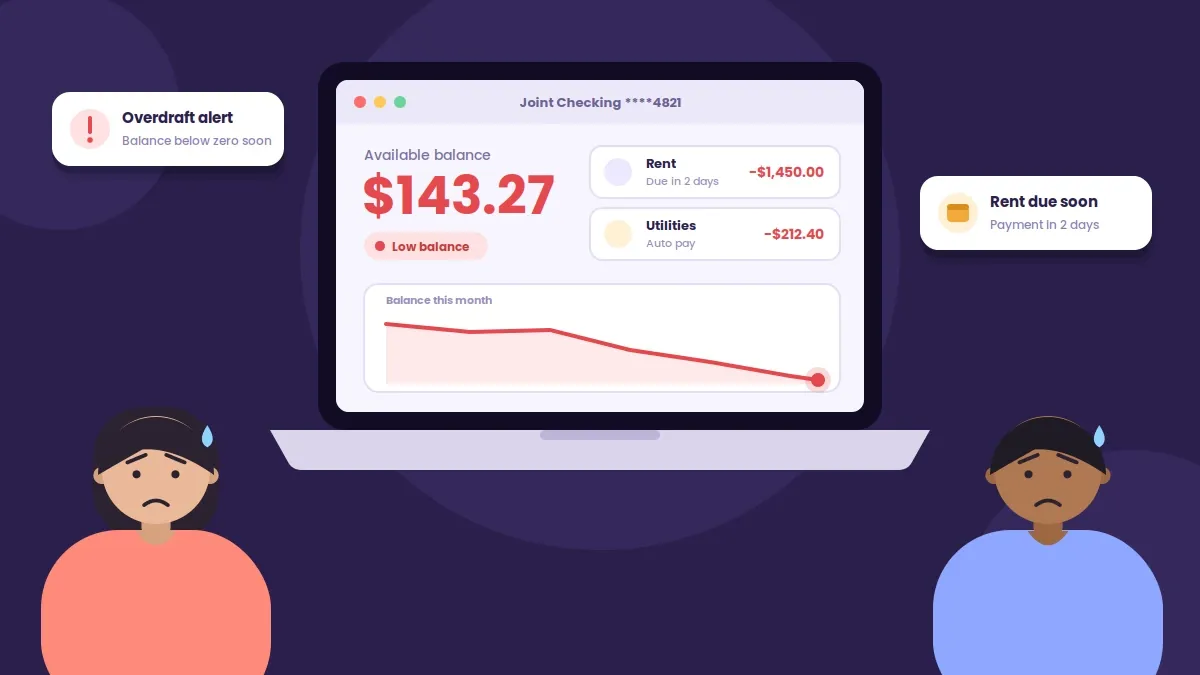
● You're
both fully responsible. If somebody overdraws the account or handles it badly,
the other owner carries the same weight, no matter who made the mess.
● Creditors
can reach it. Say one owner has a debt, a lawsuit or a judgment against them. A
creditor may be able to go after the whole balance, not just that person's
half.
● Privacy
is basically gone, since every purchase shows up for the other owner. That's a
little awkward in a good relationship and a real strain in a rough one.
● A
breakup gets risky fast. Either one of them is free to pull out all his funds
without having to provide an explanation for it.
●
Account closure typically requires
unanimous consent from all owners, so a relationship that has soured will make
it difficult to close the account.
What Happens to a Joint Account When Someone Dies?
Joint accounts
usually have something known as right of survivorship. If one of the owners
passes away, the amount left will be automatically passed to the other person
directly. For estate planning, that's a real perk. You skip the waiting and the
legal fees that probate tends to bring.
But there's a catch,
and families get tripped up by it constantly. Survivorship can override the
will. Picture a mother whose will says her money should be split evenly among
her three children. One of those kids is a joint owner on her bank account.
When she passes, that account typically goes entirely to that one child, whatever
the will says. The other two find out later, and you can guess how that goes.
Few estate problems cause more family fights. So if a joint account exists just
for convenience, not as a deliberate way to leave money to someone, say so out
loud to everyone involved while you still can.
This is why estate
planning attorneys often wince when someone suggests a joint account as a
shortcut around probate. It works when everybody agrees where the money should
go. It falls apart when the joint owner was only added to help pay bills and
the rest of the family assumed the will would settle things. A short talk, or
even a signed note kept with the will, can stop a fight that would otherwise
start after the one person who could explain it is gone.
Tax and Gift Considerations
Interest on a joint
account is taxable, and the general rule is that whoever put the money in
reports the interest, even if two names are on the account. Things get fuzzy
when the deposits aren't equal. If you put in a lot more than the other person
does, check how that affects reporting before you assume a neat 50/50 split.
Plenty of couples skip the debate by agreeing that whoever earns more of the
household income reports the interest each year. It's not strictly required,
but it keeps things simple.
Gift tax can come
into it too. Typically, the situation involves a parent adding an adult child
as a beneficiary, and then the child withdraws more than the gift tax exclusion
amount. That almost never matters for spouses or partners with an everyday
joint account. Whereas for parent-child relationships based on care or
inheritance, it becomes quite genuine, and a quick phone call to an accountant
will be more economical than a guess.
Alternatives Worth Considering
There is more to
sharing money than a joint bank account. Sometimes it's not even the best one.
● You
can each keep your own account and track shared costs together in a budgeting
app. That way you both stay full owners of your own money.
● You
could open one shared expenses account instead. Each one of you makes
contributions to cover the monthly rent, utilities, and food costs, and all
others remain separate.
● If
you are an elderly parent and looking for assistance but do not want to
transfer the ownership to anyone, then a power of attorney will allow a trusted
person to have control over the account without making him/her a co-owner.
On the other hand,
payable-on-death designation will allow you to make sure that the money is
transferred to the desired person after your death without the requirement to
add a new owner in your lifetime.
In any case, each one
of these options allows you to get certain benefits of a joint account. You
just skip the full legal ownership and the liability attached to it.
How to Decide If a Joint Account Is Right for You
A joint bank account
works well where there are two people who have roughly equal levels of trust in
each other and who deal with finances similarly. Couples married or living in
long-term partnerships are perfect candidates for this kind of arrangement. On
the other hand, a joint bank account is less appropriate in a new relationship,
where there are major differences in financial liability, or simply as an
expedient. Income gaps count too. Where there is a disparity in income, a lot
of couples opt for a compromise in which they have a joint account for their
common expenses but individual accounts for personal expenses.
Have that
conversation before opening the account. You should discuss your spending
habits, conflict resolution methods, and what will happen to the account when
circumstances change. It will feel awkward. It's still far less awkward than
finding out one person emptied the account, or that a creditor is coming after
money that was never really yours.
Joint Accounts for Business Partners and Roommates
Joint bank accounts
are not meant only for couples. They are also opened by business partners for
joint expenses and by roommates to make splitting rent and utility payments
simpler. The terms are similar regardless of who owns such an account: each
co-owner enjoys equal access and liabilities. A business or roommate
arrangement isn't automatically lower risk than a personal one, so don't treat
it that way.
For business
partners, a personal joint account is usually the wrong choice altogether. The
primary reason for business accounts is to separate personal liabilities from
those of a business. Partnership accounts that have their finances mingled in a
personal joint account often face accounting and tax problems that could have
been avoided by a business account. Roommates are usually better off with a
dedicated shared expenses account, because it gives them one place to pay bills
without merging every dollar either person owns. And the option almost nobody
thinks about is a bank account for an LLC or partnership, with clearly written
ownership percentages. It safeguards the personal property of each individual
in ways that a joint personal account does not. Common Mistakes People Make with
Joint Accounts
The biggest mistake
that people make is having an account just for ease and not planning for what
could happen if everything goes wrong. People figure trust is enough. Many
times that’s true, but then comes a breakup, a layoff, or an argument about
some large purchase. It doesn’t cost anything to have the difficult discussion
first. Who can spend what? How do you settle disagreements? What if one person
wants out? Those questions head off most of the situations that turn a joint
account into a legal or emotional mess.
Another error made is
assuming that it’s all just some casual matter when in fact it is a complete
transfer of ownership rights. The parent who adds his grown up child thinking
of nothing else but making life easy for himself does not know that what he is
doing is making it possible for him to have ownership rights on all the money,
and not just the ability to help out with the payments. There's a related trap
too. Some people assume that adding a caregiver's name shields the money from
the account holder's future creditors or long-term care costs. Often it does
the opposite, because now the money is exposed to the joint owner's financial
problems as well.
Conclusion
A joint bank account
can make life easier for the right two people. Budgeting is simpler, you can
both see what's going on, and there's a smoother path for the money if one of
you dies. But it also brings real liability, real privacy tradeoffs and real
risk if the relationship behind the account changes. That said, before you
decide to put anyone’s name on your account or agree to put yours on theirs,
just make sure you both know what you are getting into. When full joint
ownership doesn’t seem like enough for you, you are fully justified in going
for something else. The process takes around ten minutes to complete. The conversation
before it deserves a lot longer.